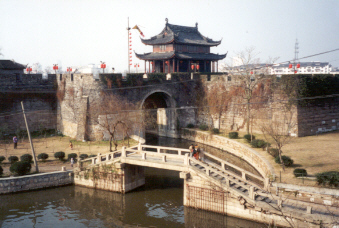
Panmen Water Gate, built in 1351 AD.
The only major piece of the ancient city wall still standing.
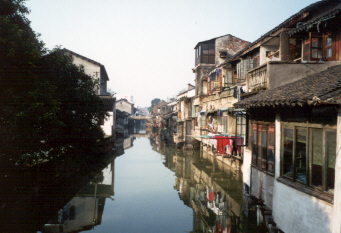
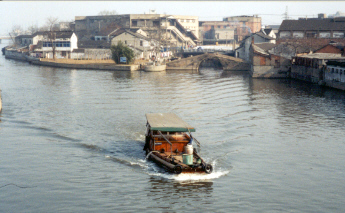
Suzhou has long been called the "Venice of China" because of the canals that run through the city. The canals, along with the remmants of a moat that once surrounded the city, are linked to the Grand Canal (Da Yunhe), which is the world's longest artificial waterway, stretching from Beijing to Hangzhou. Da Yunhe was once the main transportation route for eastern China.
|
|
Panmen Water Gate, built in 1351 AD. The only major piece of the ancient city wall still standing. |
|
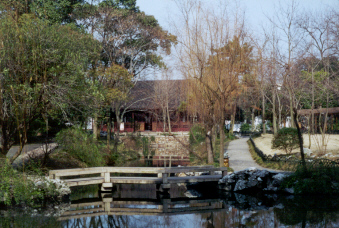
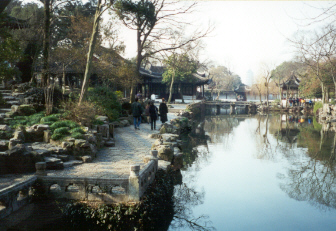
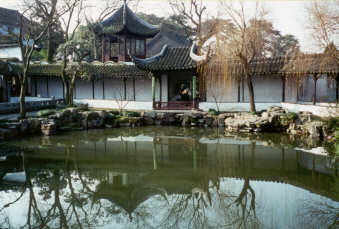
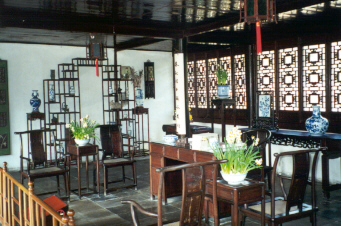
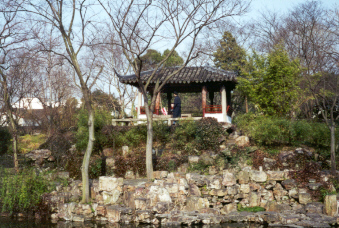
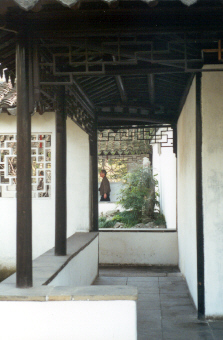
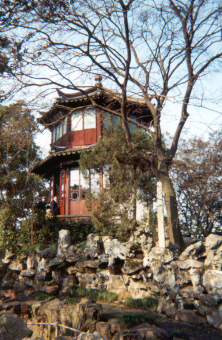
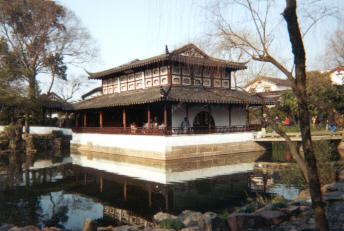
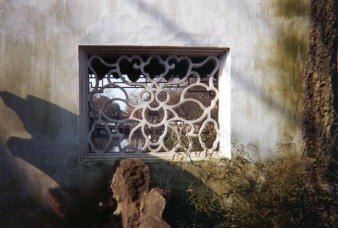
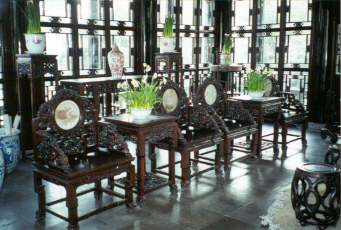
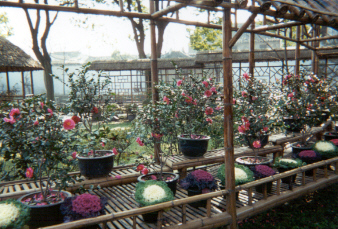
Suzhou is also known as the Garden City, because some of the finest classical gardens in China are located here. These gardens were created by retired officials and ancient scholars, and were privately owned. Each is an artistic achievement created to delight all the senses, using shape, shadow and light, color and texture to heighten our awareness of nature and self. The gardens were designed to be beautiful and full of surprises throughout the four seasons.
We visited Zhou Zheng Yuan, also known as the Garden of the Humble Administrator. It dates from the 16th century. It would be wonderful to be able to visit this garden once a month for a full year, to see its beauty unfold as the seasons change.
 |
 |
 |
 |
 |
 |
 |
 |
 |
 |
 |
|